SIZE & WEIGHT
According to the International Breed Standard for the Small Munsterlander, a Munster male should be 52cm-56cm (roughly 20.50″-22″) tall at the withers (points of the shoulder blades). A female should be 50cm-54cm (roughly 19.75″-21.25″) tall. Munsters males generally weigh between 45-55lb and females between 40-50lb. The weight for two dogs of roughly the same height can vary considerably, depending upon each dog’s body condition and build. The Munster is an athlete, so should be kept in lean and muscular body condition. However, a Munster should have a build more like a truck than a bicycle. The Breed Standard calls for “strong and harmonious build of medium size, showing balanced proportions with a lot of quality and elegance.” The Standard calls for every aspect of a Munster’s body to be strong and muscular, with good angles and strong bone. In the USA, Munsters in general are becoming too small and slightly built.
COLORS & MARKINGS
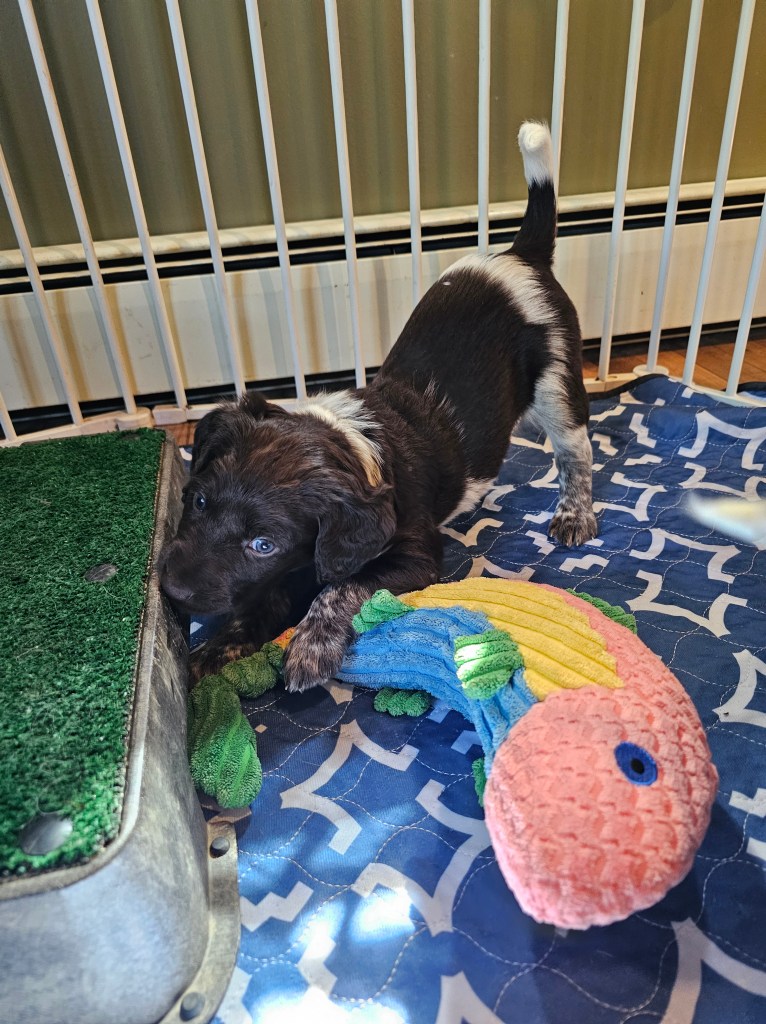
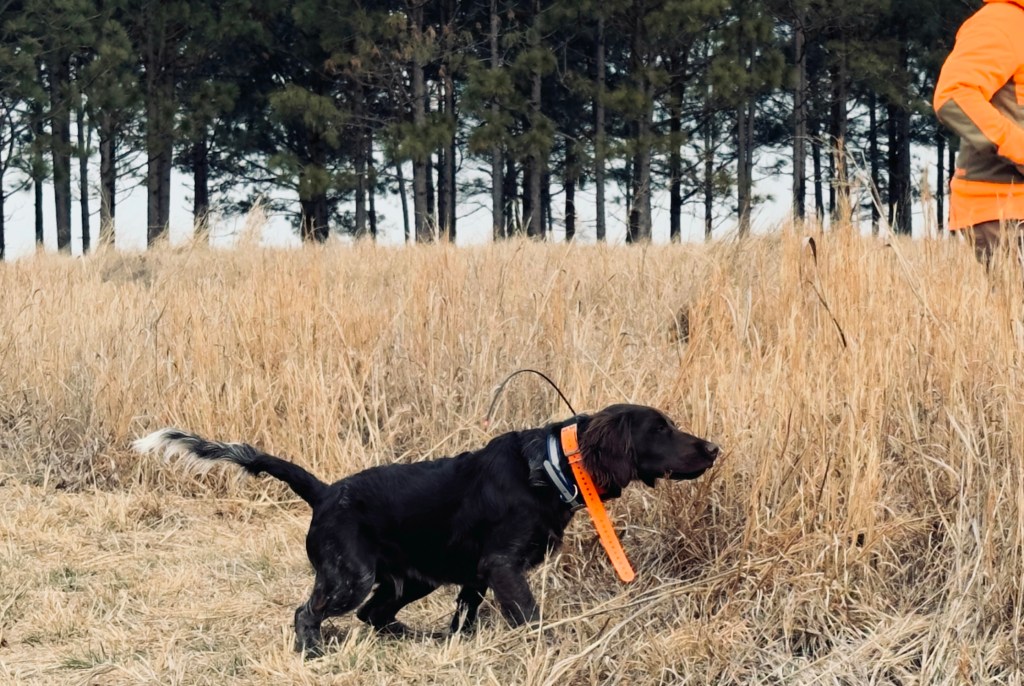
The Breed Standard requires Munsters be a combination of brown and white in color with a white-tipped tail. Solid-colored Munsters have an eliminating fault and therefore cannot be bred. Some are a milk chocolate brown and some are a dark chocolate brown. Some are so dark brown they almost look black. Reddish-brown is improper, but occasionally seen. There is a rarely seen coloring exception dating back to one of the Breed’s founders called “Jungklaus Markings.” These are tan markings, typically on the muzzle/cheeks, eyebrows and around the anus. Munsters come in two defined colors: Roan and Brown & White. They are equally common colors, but recently the roan color seems to have increased in popularity, despite being more difficult to see in the cover while upland hunting. Many owners have their roan munsters where orange vests to see them better when in cover. Roan Munsters are white dogs with brown patches and a lot of brown ticking. Roan Munsters can be a lighter roan, where there are approximately equal amounts of brown and white in the ticking. With a darker roan Munster, there is more brown than white in the ticking. Brown & White Munsters are white dogs with brown patches and some brown speckling in the white areas, especially on the legs. Brown & White Munsters generally have the most feathering, especially on their tails. Brown & White Munsters are popular with Ruffed Grouse and Woodcock hunters because of their easier visibility in wooded cover. A Munster’s head can be solid brown or have a blaze. A blaze is most often seen on the forehead, but sometimes extends down and around the muzzle. The blaze can be slight or prominent. A prominent blaze comes from the Spaniel influence in the breed. Spaniels were used to give the Munster its beautiful feathering and much of its head/facial features. This is why people often mistake Munsters for Springer Spaniels. In roan Munsters, the blaze often develops so much ticking that it becomes hard to distinguish from solid brown. A little bit of whitish coloring on the tip of the nose is common in roan Munster puppies. As the puppy’s coat matures, the white markings most often all but disappears. Many Munsters have a white patch under their chin.
Roan puppies color change
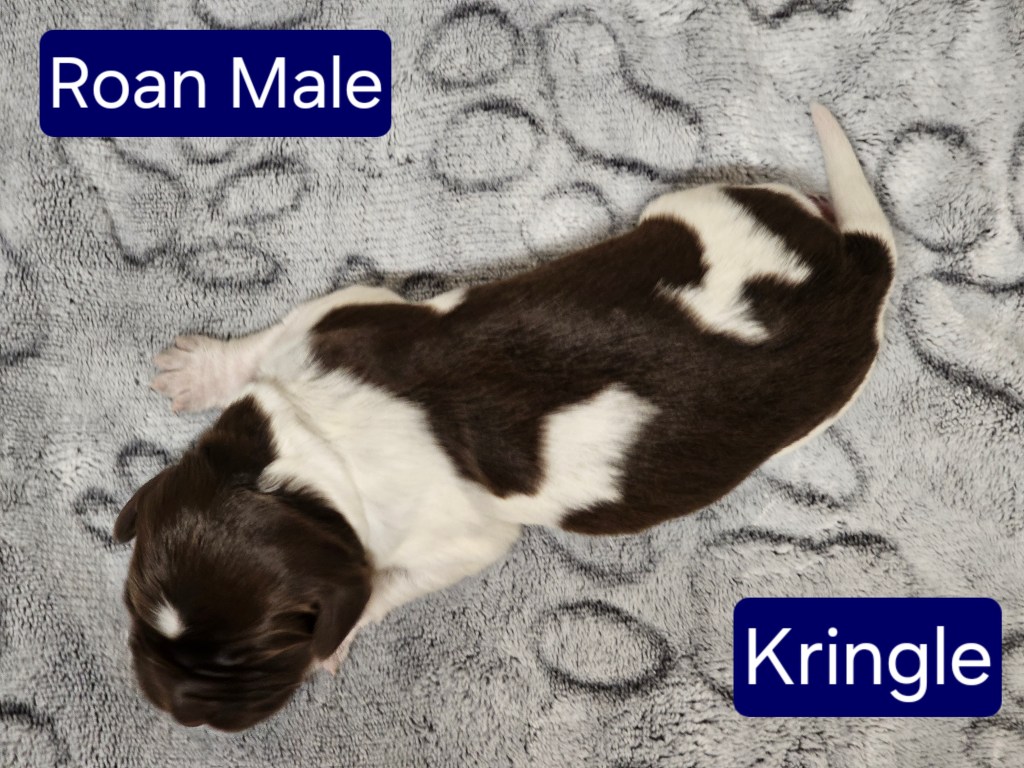
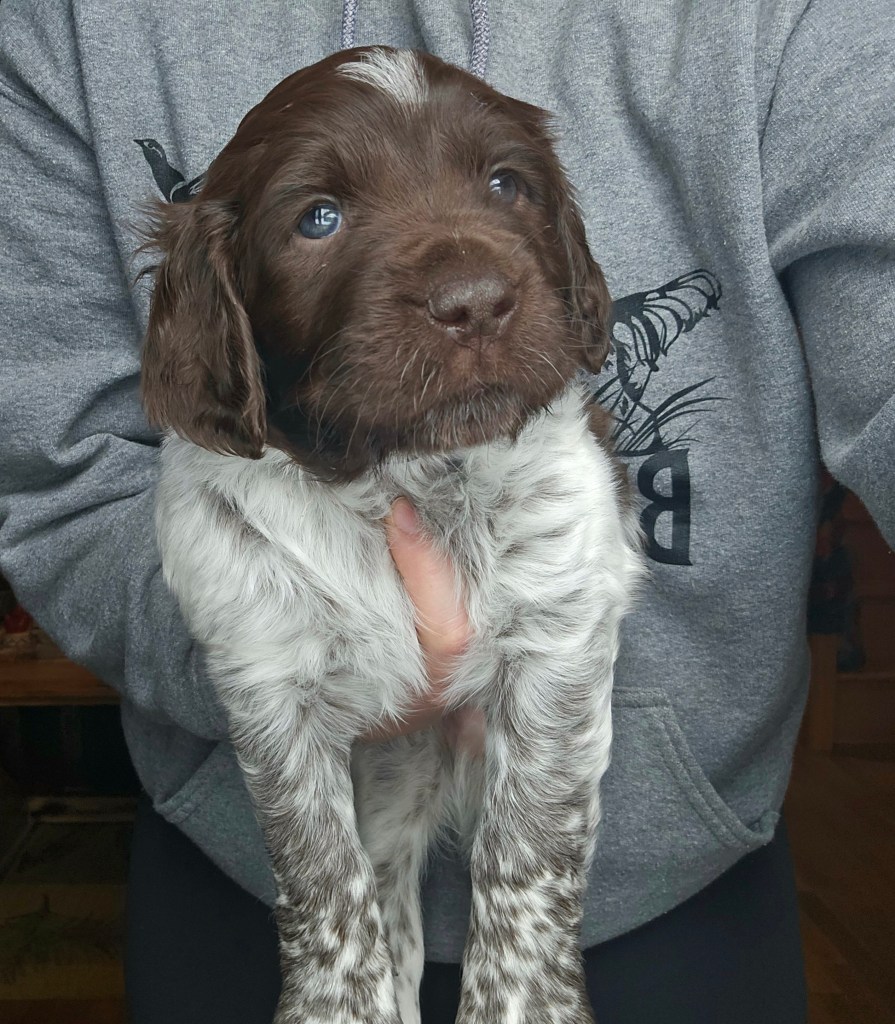
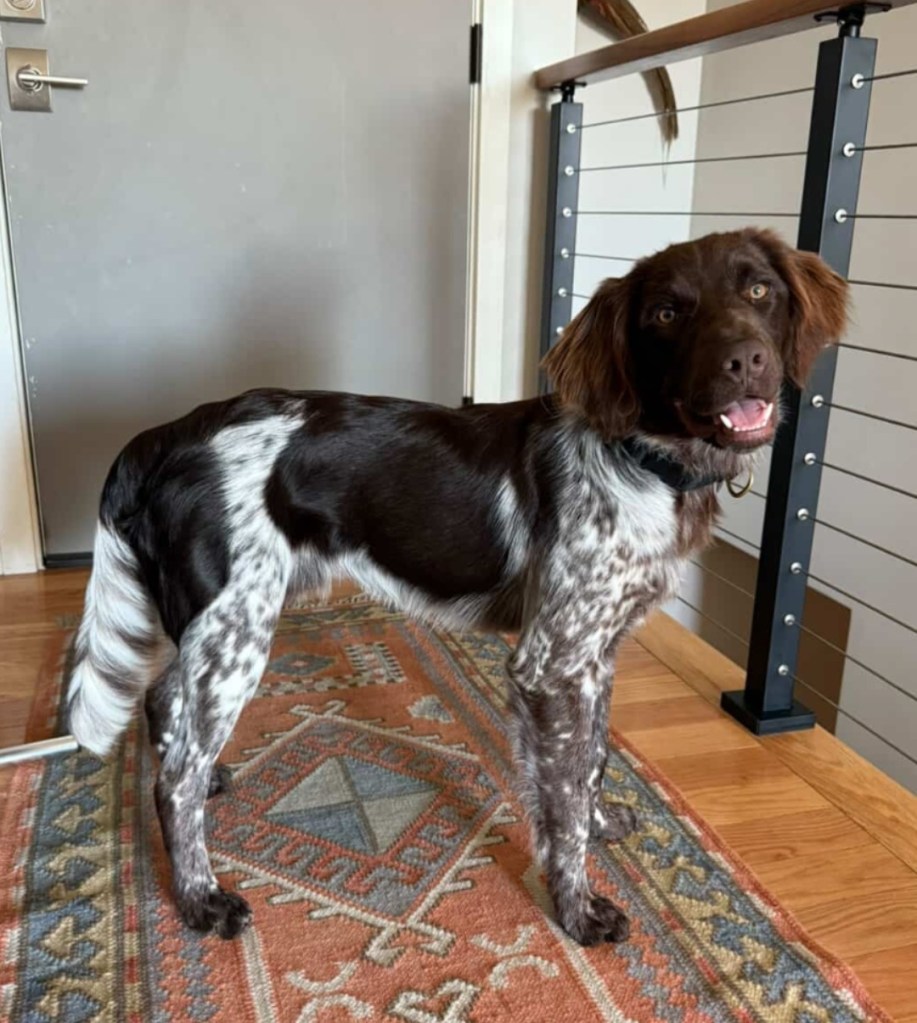
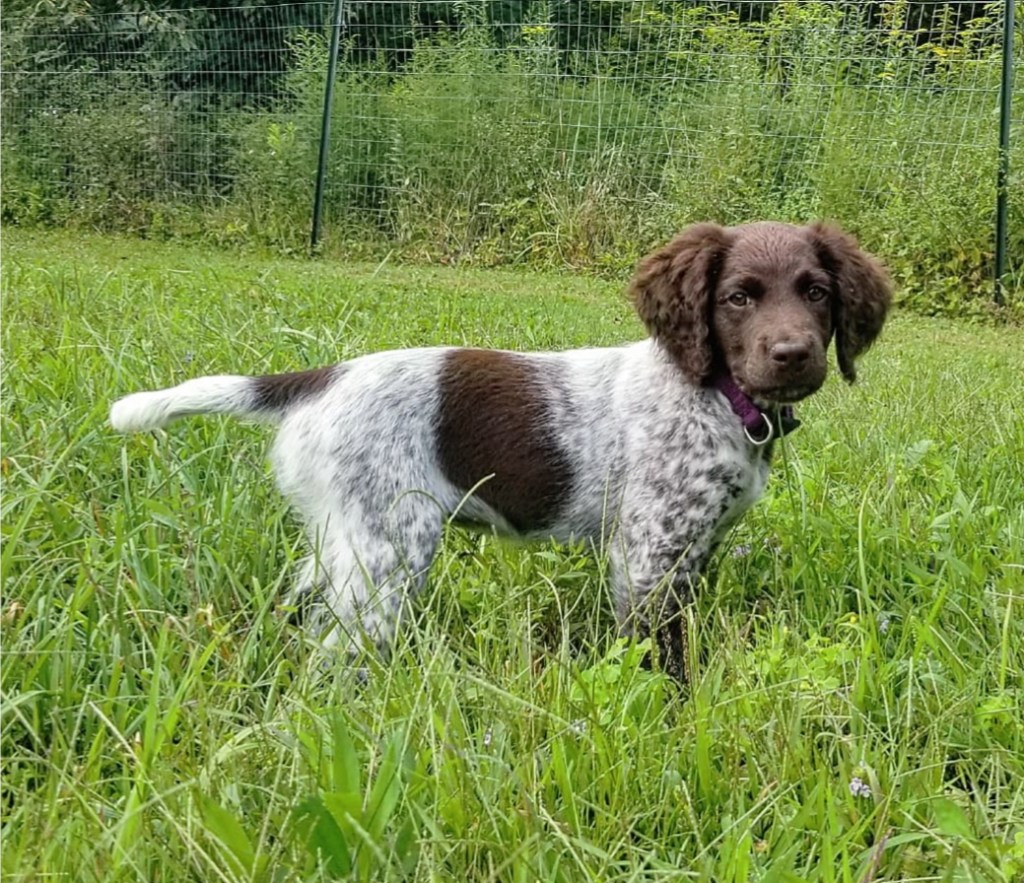
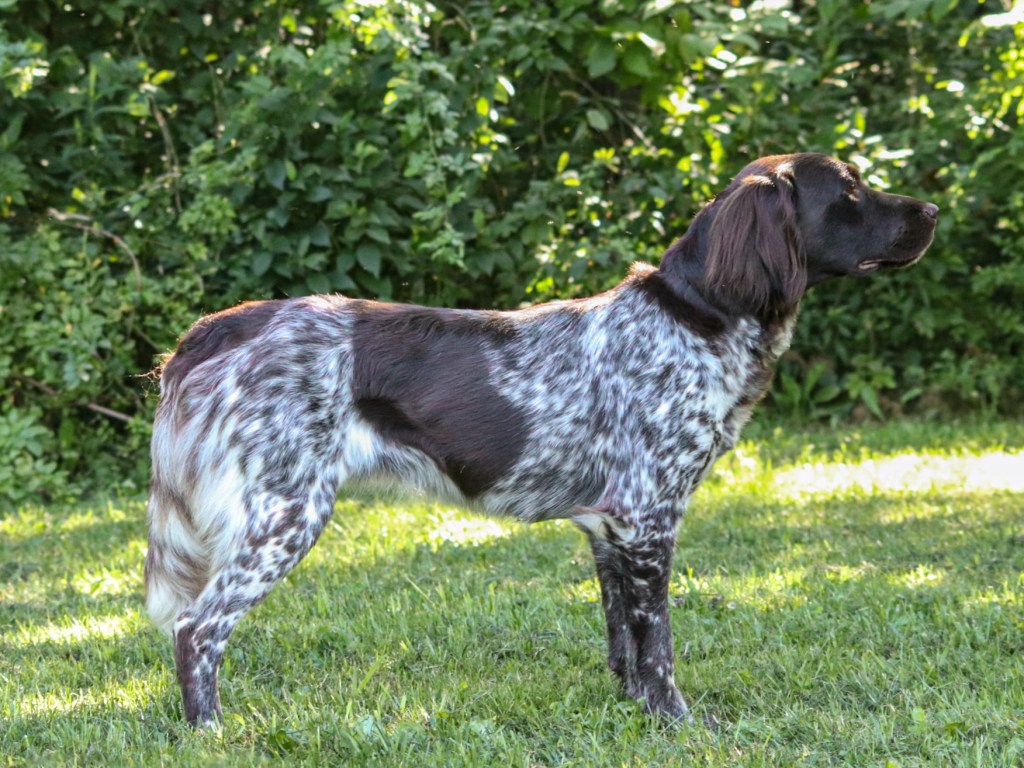
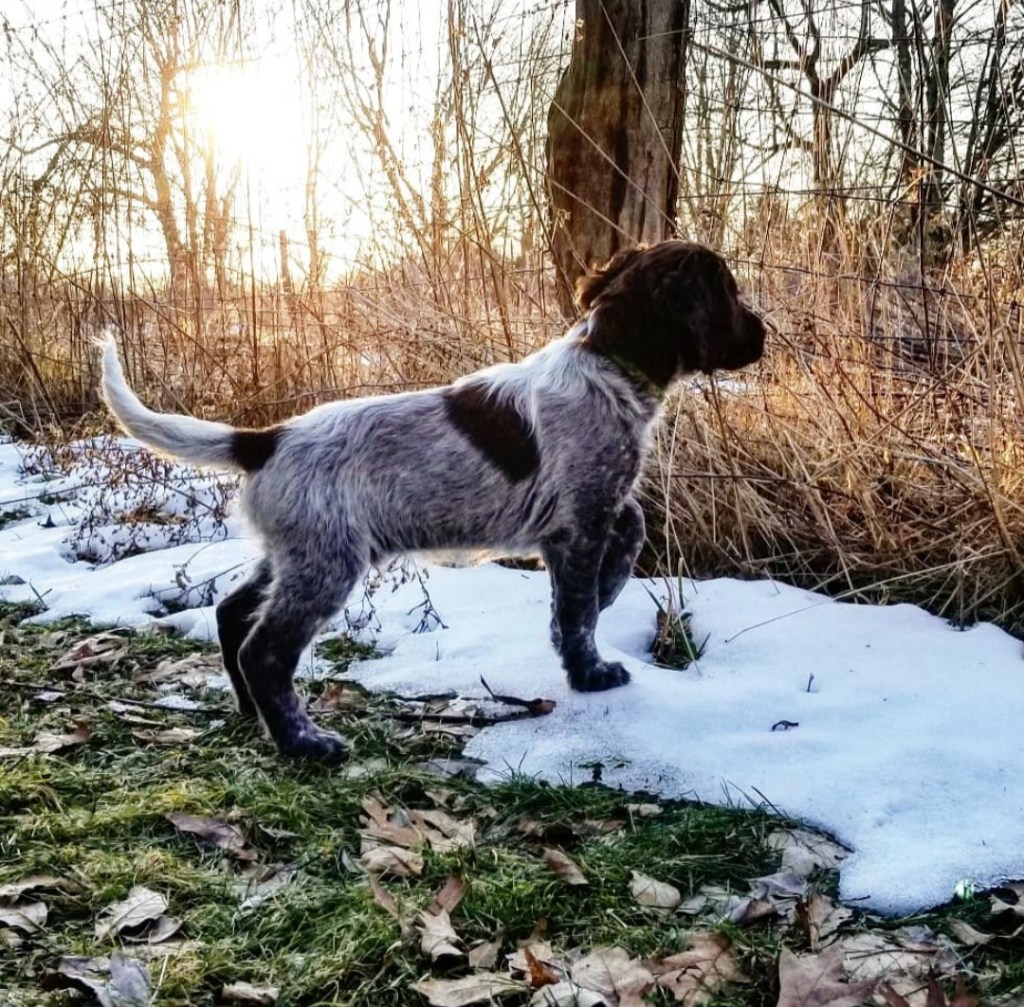
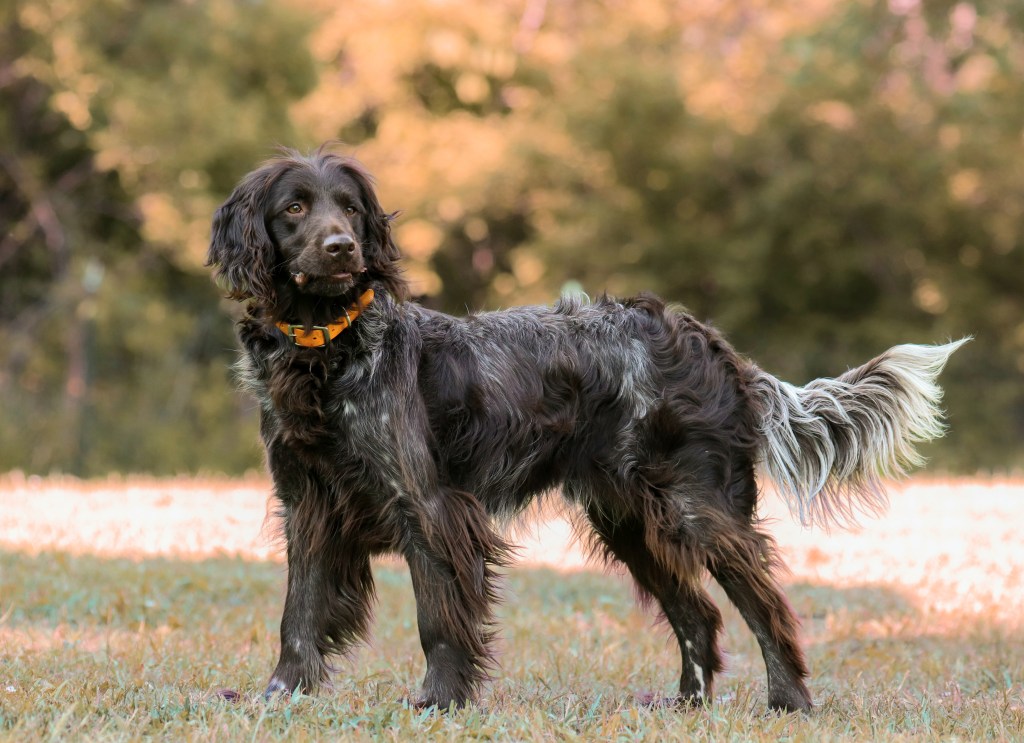
Brown and white
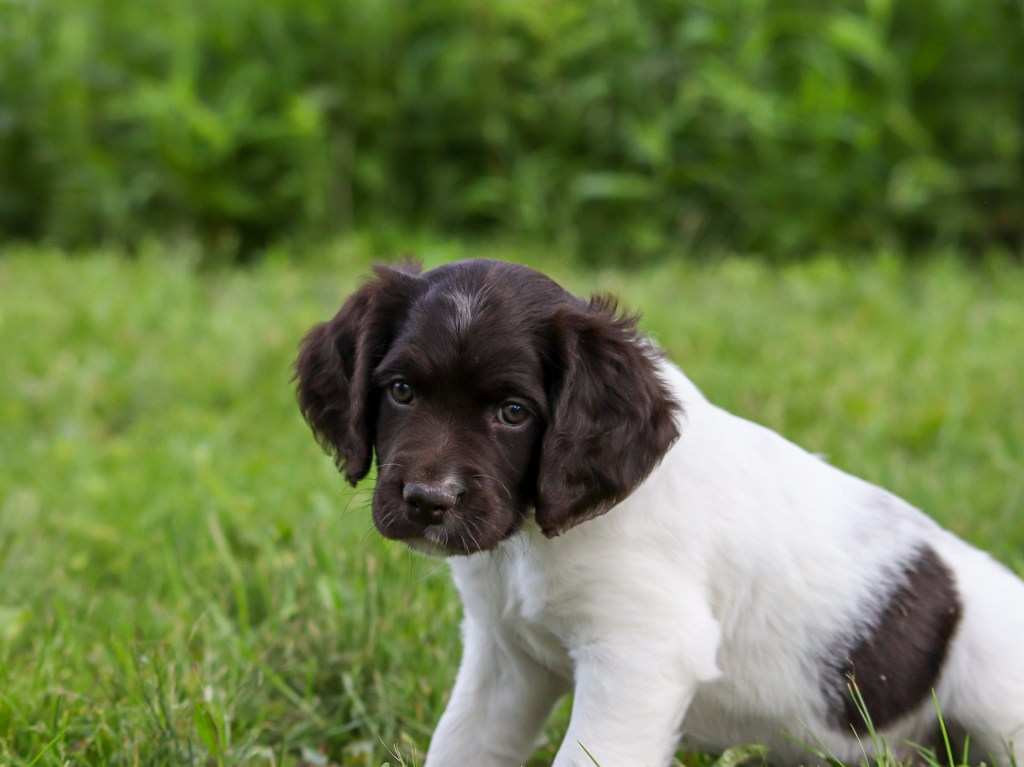
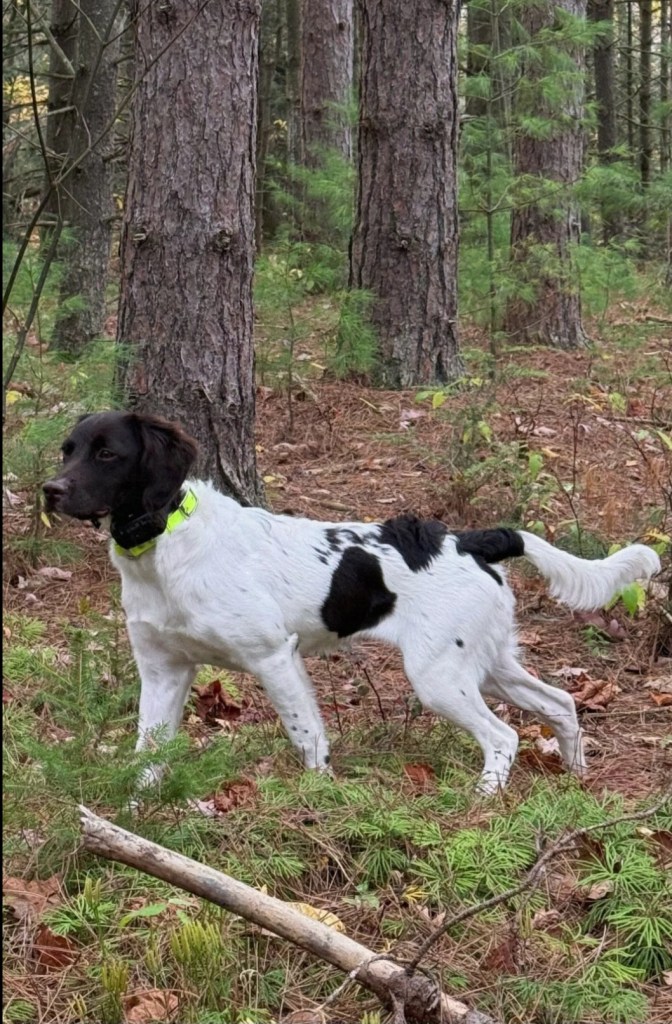
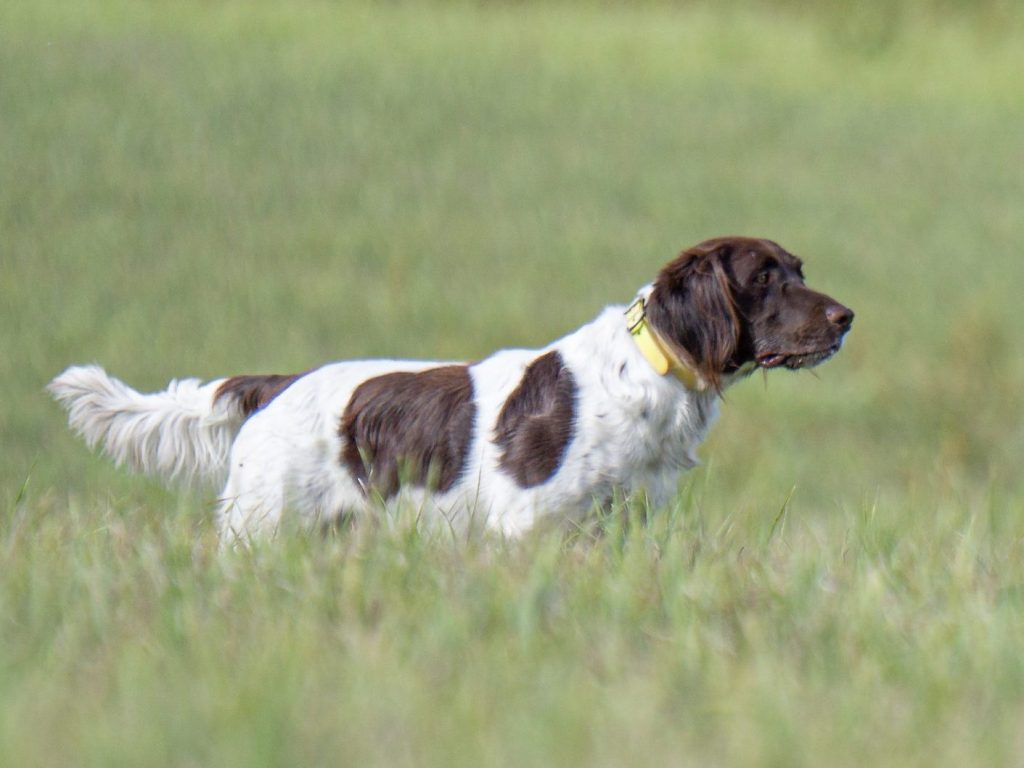
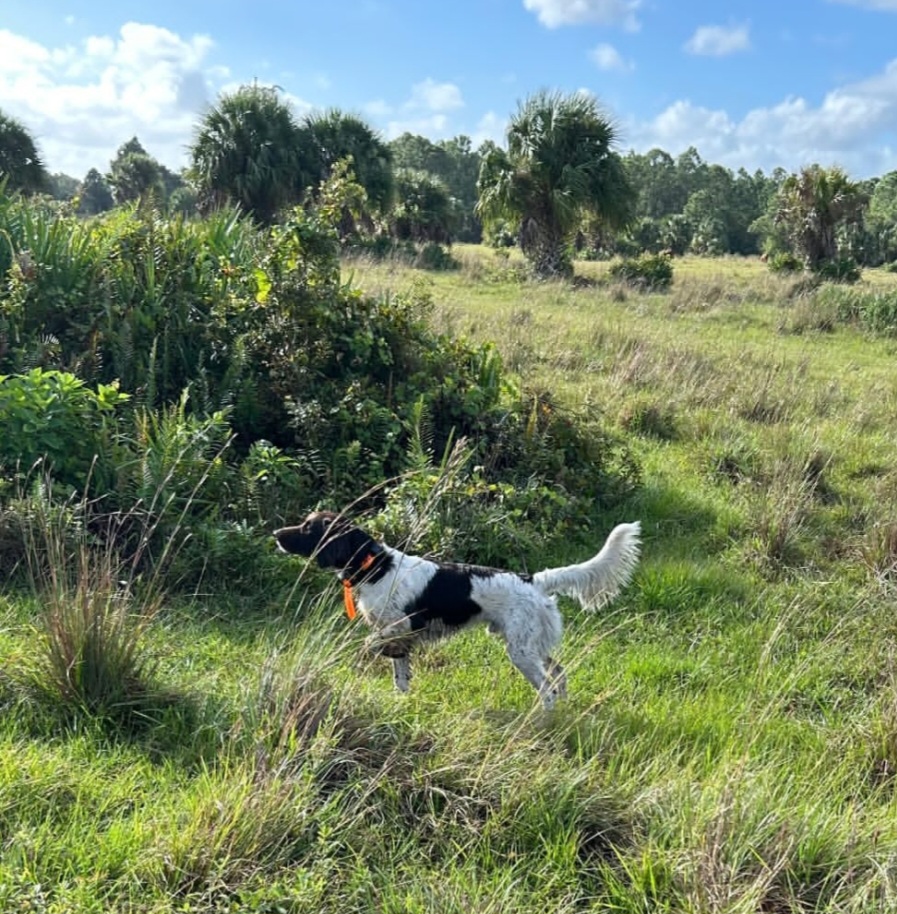
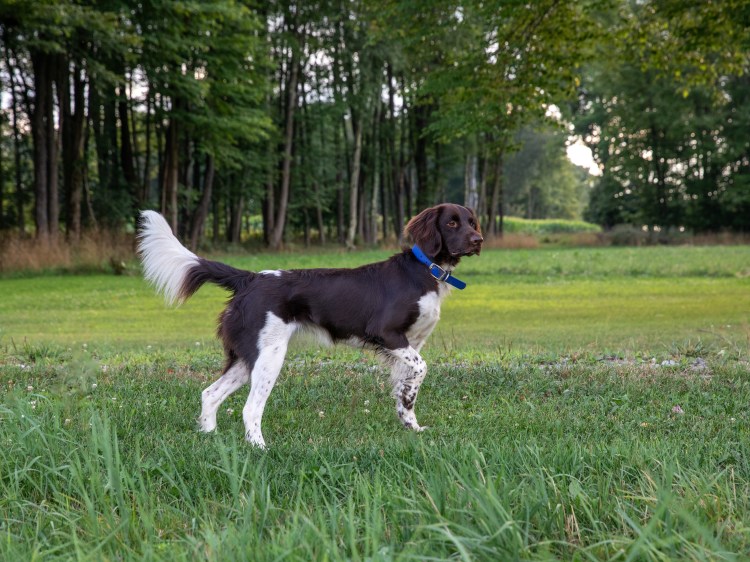
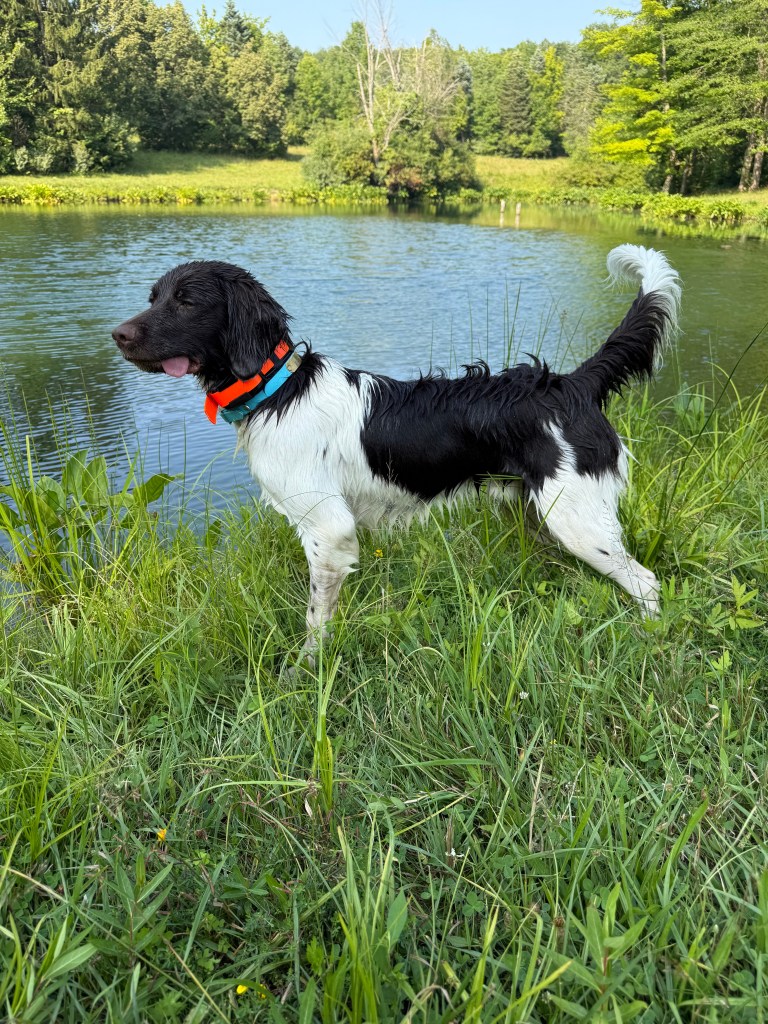
Rare Colors/Markings: The rarest marking is a Munster with Jungklaus Markings. This marking may have been fairly common when the Breed was first being developed, but today you will likely never see a Munster with Jungklaus Markings in real life. Originally, the most common coloring/marking combination was Brown & White with a prominent blaze on the forehead and muzzle. Today, it is one of the rarest at about 10%-15% of Munsters. Munsters with any amount of blazing on their foreheads/muzzles are also not very common at 20-25%. Today, the most common head color is solid brown. A dog with a large brown patch covering much of the dog’s torso is called “caped” or “saddled.” This is a fairly common marking, but a somewhat rare coloring/marking combination is a fully-caped, dark roan Munster. These dogs appear to be almost solid brown. Only about 15%-20% of Munsters get to be almost completely brown.
Jungklaus Markings
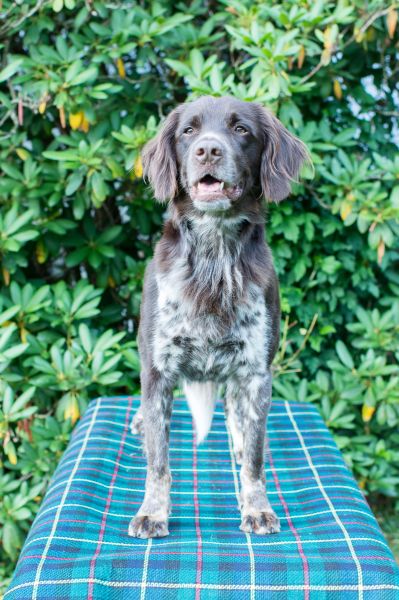
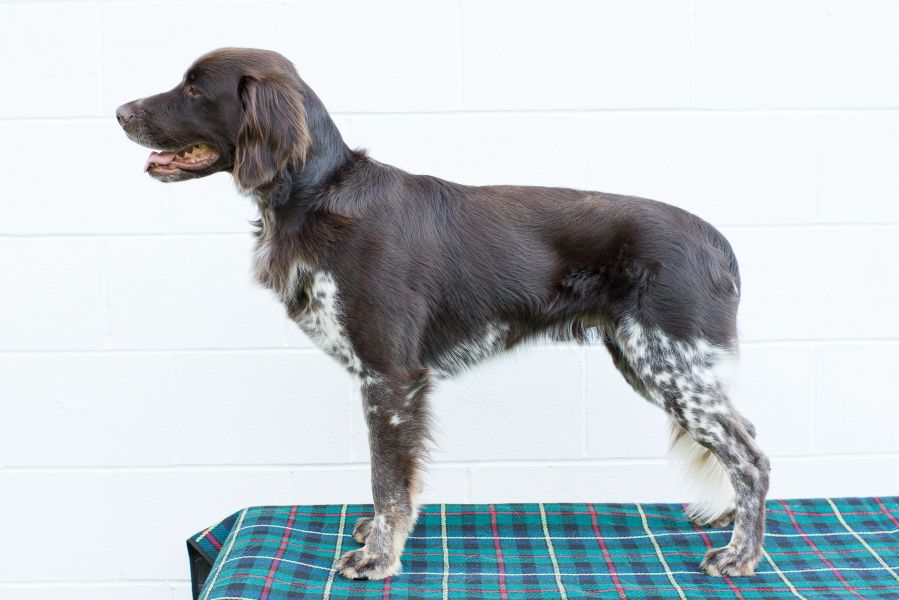
Jax has light tan coloring on the bottom of his legs. These are Jungklaus markings. Jax is also fully caped.
Caped or Saddled Marking
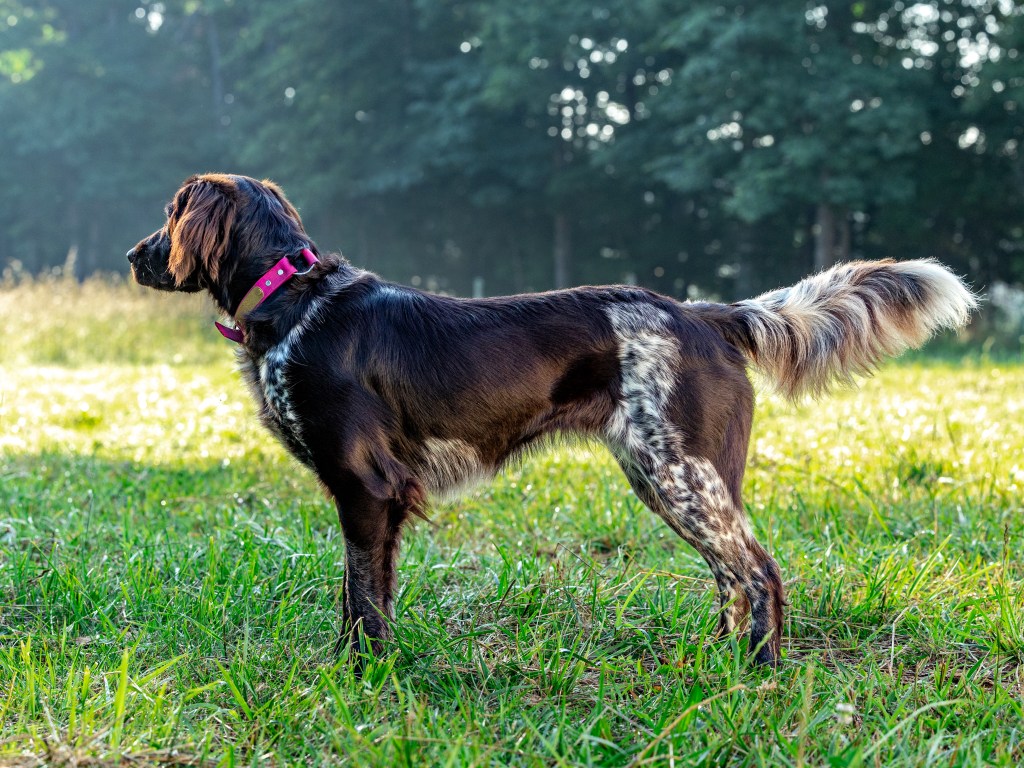
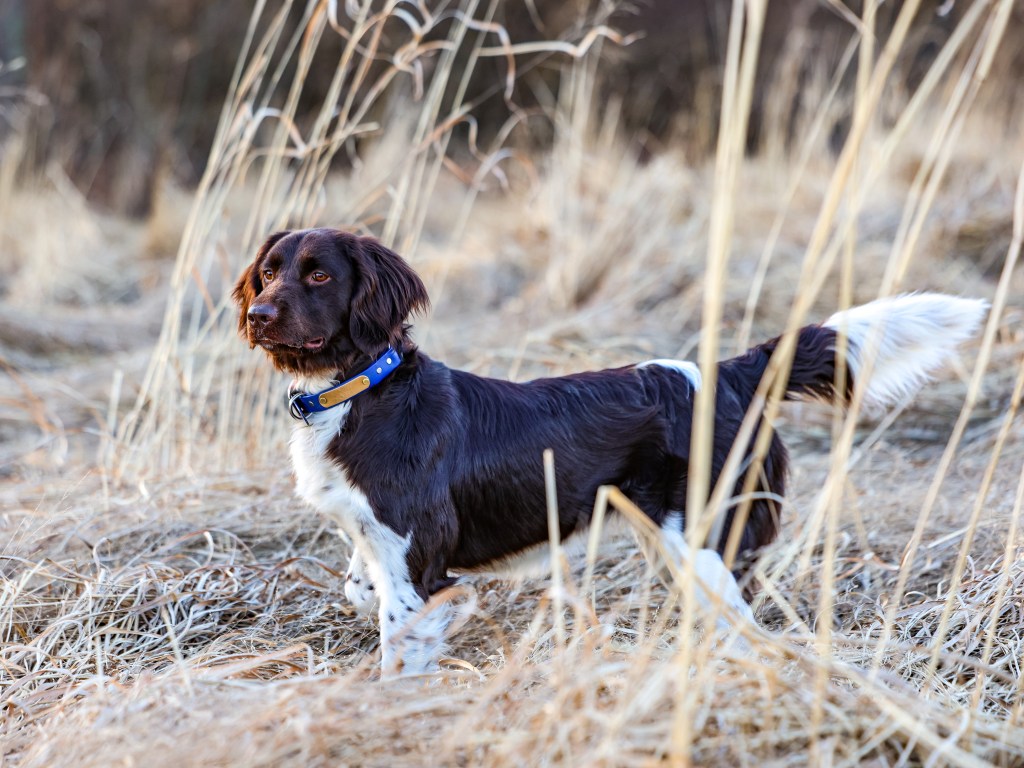
Caped and very dark roan
For a more detailed Description of the breed, please click the link below:
FCI Breed Standard: click here
Rewritten with the permission of Michelle Wilber – Brush Dale Kennel
 Buckwood Kennel